Category: Permits & Taxes

  • Why Most Small Restaurants Struggle in Their First Year (And How to Survive It)

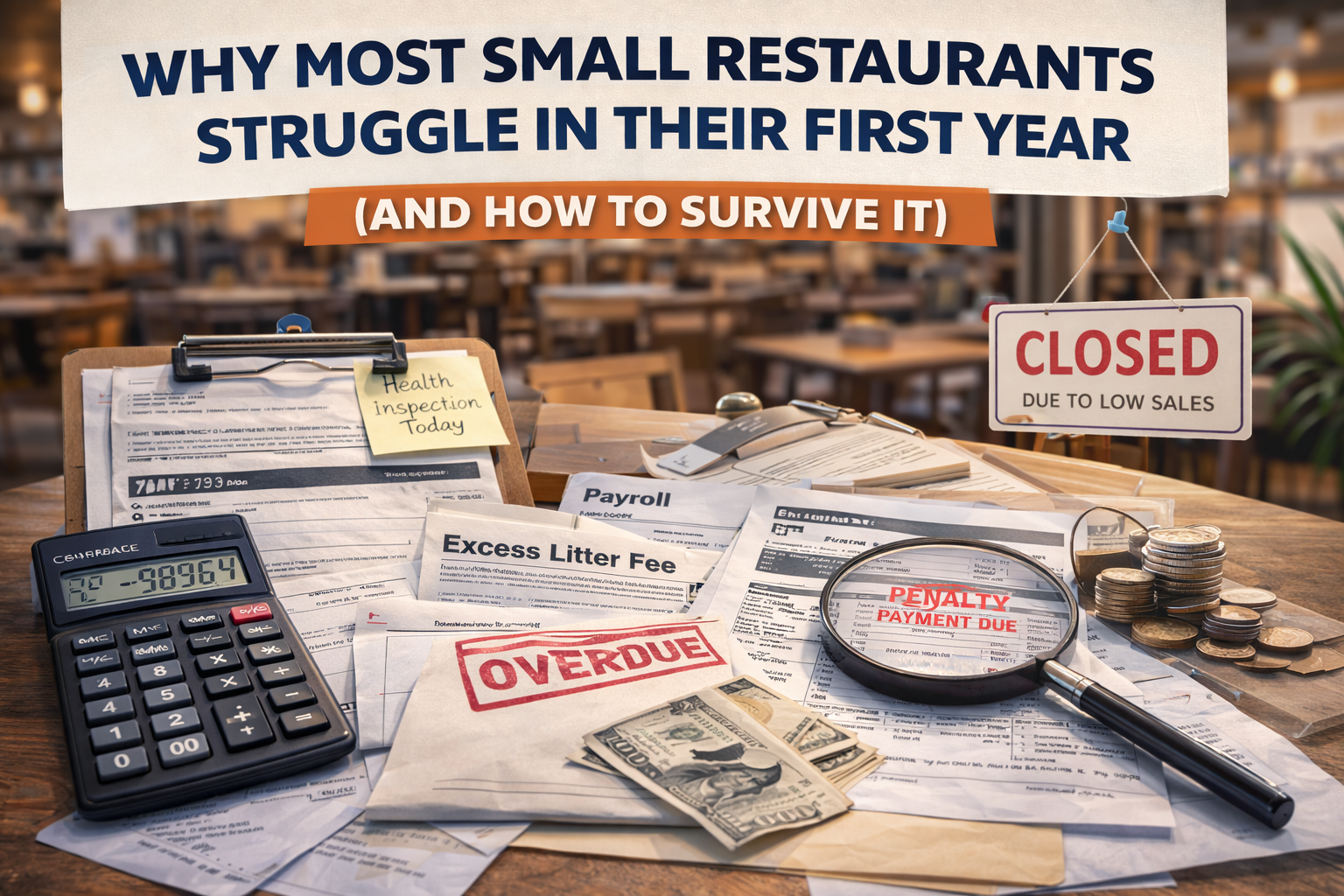
    Why Most Small Restaurants Struggle in Their First Year (And How to Survive It)

    The first year of running a small restaurant is not glamorous.

    It’s not viral.

    It’s not fast money.

    It’s not immediate freedom.

    It’s pressure.

    Most small restaurants struggle in their first year — not because the food is bad, but because expectations don’t match reality.

    If you’re planning to open or buy a restaurant, understanding this first-year pressure could save you financially and mentally.

    1. Revenue Is Almost Always Overestimated

    Before opening, numbers look clean.

    You estimate:

    • Daily sales
    • Average ticket
    • Monthly revenue
    • Growth projections

    But once you open:

    • Mondays are slower than expected.
    • Rain kills foot traffic.
    • Word-of-mouth takes months.
    • Marketing costs more than expected.
    • Customers resist price increases.

    If you inherited underpriced menu items and need to adjust them to survive, some customers push back.

    That temporary drop in sales feels heavy.

    Year one revenue rarely follows your spreadsheet.

    2. Fixed Costs Don’t Adjust to Reality

    Here’s the brutal truth:

    Your expenses don’t shrink when business is slow.

    You still owe:

    • Rent
    • Property tax (in my case nearly $8,000 per year)
    • Payroll taxes
    • Workers’ comp
    • Utilities
    • Waste management
    • Recycling compliance
    • Health permits
    • Excess Litter Fee
    • Insurance
    • Loan payments (if financed)

    These fixed costs create pressure.

    Even if your sales drop by 30%, your bills don’t.

    Government compliance alone can stack quickly, as I explained here:

    The Hidden Government Costs of Running a Small Restaurant in California

    This mismatch between variable revenue and fixed costs crushes many restaurants in year one.

    3. Cash Flow Problems Appear Faster Than Expected

    Profit and cash are not the same thing.

    You may show profit on paper.

    But still struggle to pay bills on time.

    Why?

    Because:

    • Vendors want payment weekly.
    • Payroll is due biweekly.
    • Sales tax must be filed.
    • Reinspection fees are immediate.
    • Unexpected repairs don’t wait.

    This is why I emphasize liquidity over revenue here:

    Why Poor Bookkeeping and Cash Flow Kill Small Businesses

    First-year survival is about managing timing.

    Not just making sales.

    4. Inherited Problems Multiply Stress

    If you bought an existing restaurant, year one may include:

    • Equipment failures
    • Sanitation corrections
    • Pest control issues
    • Reputation repair
    • Staff retraining
    • Lease negotiation pressure
    • Permit transfers
    • Compliance cleanup

    You’re not just operating.

    You’re rebuilding.

    Buying isn’t automatically easier than starting fresh:

    Buying an Existing Restaurant vs Starting From Scratch: The Real Risks Nobody Talks About

    Sometimes starting from zero gives you more control.

    5. Underestimating Working Capital

    Many new owners budget for:

    • Purchase price
    • Equipment
    • Initial inventory

    But they underestimate:

    • Slow months
    • Permit renewals
    • Unexpected penalties
    • Equipment repair
    • Graffiti cleanup
    • Waste compliance penalties
    • Excess Litter Fee
    • Property tax installments

    Without enough cushion, every surprise feels catastrophic.

    I explain realistic cash cushion expectations here:

    How Much Cash You Really Need Before Buying a Small Business

    Year one is not about profit.

    It’s about survival margin.

    6. Debt Magnifies Every Slow Day

    If you financed the purchase, monthly payments create psychological pressure.

    Debt removes flexibility.

    When business is slow:

    • You can’t “wait it out.”
    • You can’t experiment freely.
    • You can’t absorb mistakes easily.

    I wrote about that pressure here:

    Is Taking a Loan to Start a Small Business a Mistake?

    Debt is not evil.

    But debt + unstable revenue = anxiety.

    7. Long Hours and Burnout

    Most small restaurant owners work:

    • 10–12 hour days
    • Six or seven days per week
    • With limited staffing
    • Handling operations, cleaning, ordering, compliance, and admin

    Burnout happens quietly.

    Fatigue leads to:

    • Poor decisions
    • Missed paperwork
    • Increased stress
    • Emotional frustration

    Year one is physically demanding.

    And mentally heavier than expected.

    8. Pricing Pressure and Customer Adjustment

    Raising prices to reflect:

    • Food inflation
    • Labor costs
    • Compliance costs
    • Merchant fees
    • Insurance

    Is necessary for survival.

    But customers compare to old prices.

    They remember what things “used to cost.”

    That adjustment period can reduce volume.

    It takes time for pricing to stabilize.

    9. Marketing Doesn’t Automatically Solve It

    Many first-year owners believe:

    “If we market more, we’ll fix it.”

    Marketing helps.

    But if fundamentals are weak — pricing, margins, cost control — marketing just accelerates cash burn.

    Sustainable growth is operational, not just promotional.

    10. The Psychological Weight

    This is rarely discussed.

    When you:

    • Open at 9am
    • Close at 9pm
    • Commute daily
    • Handle inspectors
    • Read penalty notices
    • Watch sales fluctuate
    • Adjust pricing
    • Worry about payroll

    The emotional weight builds.

    And when you feel responsible for employees and customers, it intensifies.

    Ownership is not just business.

    It’s personal.

    Why Some Restaurants Survive Year One

    Because they:

    • Track numbers weekly
    • Cut waste aggressively
    • Negotiate vendors
    • Control labor tightly
    • Stay compliant
    • Maintain mental resilience
    • Build slowly instead of forcing growth

    Survival is discipline.

    Not luck.

    Practical Survival Strategy for Year One

    Here’s what truly helps:

    1️⃣ Build a 6-Month Reserve

    Before buying or opening, aim for at least six months of operating cushion.

    2️⃣ Overestimate Government Costs

    Assume:

    • Inspections
    • Fees
    • Permit renewals
    • Waste penalties
    • Compliance notices

    Will happen.

    Because they will.

    3️⃣ Monitor Cash Weekly

    Not monthly.

    Weekly.

    4️⃣ Adjust Pricing Early

    Don’t wait until you’re desperate.

    5️⃣ Control Labor

    Labor creep destroys margin faster than food waste.

    6️⃣ Protect Your Mental Health

    Rest matters.

    Clear thinking matters.

    Final Thoughts

    The first year of running a restaurant is not about getting rich.

    It’s about surviving long enough to stabilize.

    If you survive year one:

    • You gain experience.
    • You understand your numbers.
    • You refine systems.
    • You build resilience.

    Many restaurants fail because expectations were unrealistic.

    Not because effort was lacking.

    If you’re considering entering the restaurant business, start here:

    How Much It Really Costs to Start a Small Food Business in California

    Clarity before commitment is cheaper than regret.
  • The Hidden Government Costs of Running a Small Restaurant in California

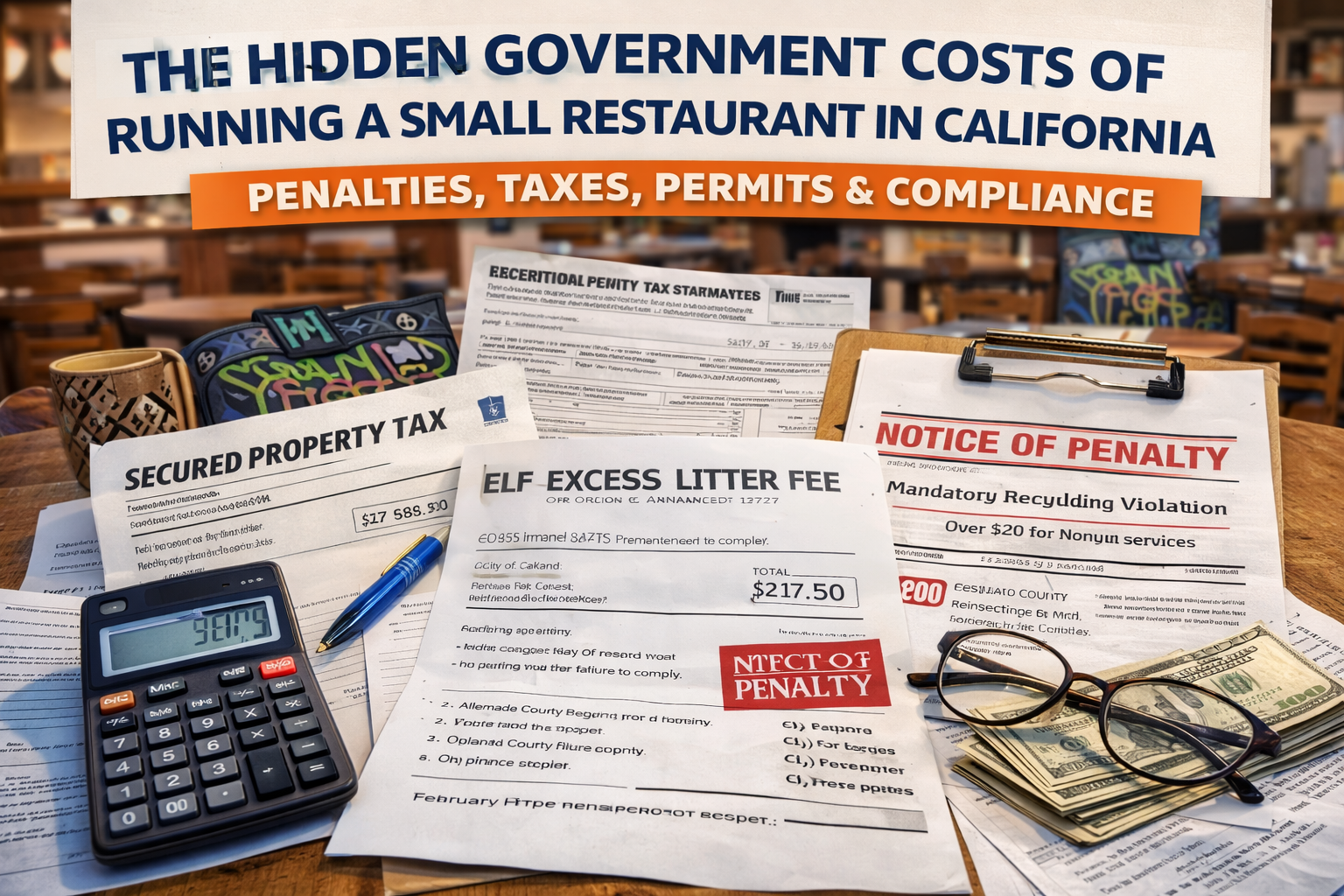
    The Hidden Government Costs of Running a Small Restaurant in California

    When people think about opening a restaurant, they think about:

    • Food

    • Rent

    • Equipment

    • Payroll

    What most people don’t think about?

    Government costs.

    Not just the business license.

    Not just the health permit.

    I’m talking about the hidden, recurring, compliance-heavy, penalty-backed costs that show up after you already bought the business.

    If you’ve read my breakdown of startup expenses in
    How Much It Really Costs to Start a Small Food Business in California

    You already know opening is expensive.

    But operating?

    That’s where the real surprise begins.


    1. Property Taxes: Almost $8,000 Per Year

    One of the first documents that really hit me was the secured property tax statement.

    For 2025–2026, the total was:

    $7,897.32

    Split into two installments of about:

    $3,948.66 each

    That’s nearly $8,000 a year.

    Before:

    • Payroll

    • Food cost

    • Utilities

    • Insurance

    • Loan payments

    Property tax doesn’t care if business is slow.
    It doesn’t care if you’re renovating.
    It doesn’t care if you just bought the place.

    It is due.

    Miss it, and penalties stack.

    This is rarely discussed in “how to start a restaurant” videos.

    But it’s real.


    2. Environmental Health Fees & Reinspection Charges

    When I took over the business, I inherited more than equipment.

    I inherited problems.

    The restaurant had cockroaches.

    The inspector noticed.

    We were forced to close for a month.

    That alone destroyed cash flow.

    (If you want to understand how cash flow pressure builds, read:

    Small Business Cash Flow.)

    After working to fix everything, the inspector had to come back.

    And guess what?

    Reinspection isn’t free.

    I received an invoice for:

    • $174.00 special service hourly rate

    • $43.50 penalty charge

    Total: $217.50

    This is separate from annual health permit fees.

    This is separate from lost revenue.

    This is separate from extermination costs.

    It stacks.


    3. Mandatory Trash & Recycling (Even If You Just Took Over)

    Here’s something I didn’t expect.

    When I bought the business, the previous owner only had regular garbage service.

    No proper recycling.

    I didn’t even know that was a violation.

    Then I received a notice from Alameda County Waste Management.

    You are legally required to have:

    • Trash service

    • Recycling service

    • Compliance with waste separation laws

    I was charged over $200 in penalties for non-compliance.

    Even though I had just taken over.

    There is no grace period for new owners.

    You inherit the compliance.

    Not just the lease.
    Not just the equipment.
    The regulatory exposure too.


    4. The Oakland Excess Litter Fee (ELF)

    Then came something called the Excess Litter Fee (ELF).

    The City of Oakland automatically classifies fast food businesses under this ordinance.

    Why?

    Because we sell food in packaging.

    According to the city:
    This fee funds litter cleanup and storm drain protection.

    Here’s what makes it heavy:

    • You must file an annual declaration.

    • You must report gross receipts.

    • Failure to pay can result in:

      • 10%–50% penalties

      • 1% monthly interest

      • $50 Failure to File fee

    • Appeals require a $67.50 filing fee

    Even if your restaurant is struggling.
    Even if you’re barely breaking even.

    The fee applies.

    This is on top of:

    • Business license

    • Health permits

    • Property taxes

    • Waste compliance

    • Fire inspection

    • Insurance

    Every layer adds administrative work and risk.


    5. Graffiti Cleanup & Neighborhood Realities

    Nobody talks about this.

    If you operate in certain parts of California — especially urban areas — graffiti becomes a recurring problem.

    Walls.
    Fences.
    Trash enclosures.
    Utility boxes near your storefront.

    Even if you didn’t cause it.
    Even if you didn’t allow it.

    It affects your property.

    And inspectors care about appearance and sanitation.

    You may need to:

    • Repaint

    • Pressure wash

    • Maintain exterior fencing

    • Keep the area free of litter

    This isn’t written clearly in startup checklists.

    But it’s part of operating reality.

    And it costs money.


    6. Administrative Burden (Time = Hidden Cost)

    Beyond money, there is time.

    Every compliance letter requires:

    • Reading

    • Understanding

    • Filing paperwork

    • Meeting deadlines

    • Tracking due dates

    If you miss a deadline:
    Penalties.

    If you misunderstand classification:
    Penalties.

    If you fail to declare properly:
    Penalties.

    And when you’re working from 9 a.m. to 9 or 10 p.m. daily,
    with only part-time employee help,
    that paperwork feels overwhelming.

    Government cost isn’t just money.

    It’s mental load.


    7. The Stacking Effect

    Let’s summarize just some of the numbers:

    • Property tax: ~$7,897

    • Reinspection: $217.50

    • Recycling penalty: $200+

    • Excess Litter Fee

    • Mandatory waste contracts

    • Permit renewals

    • Graffiti maintenance

    • Compliance filing risks

    Now imagine this happening while:

    • Sales are slow

    • Pricing adjustments are upsetting customers

    • You’re commuting daily

    • You inherited operational problems

    That’s when you understand:

    Running a small restaurant is not just about food.

    It’s about regulatory survival.


    8. Why This Matters Before Buying

    If you’re thinking about buying a business, read:

    How Much Cash You Really Need Before Buying a Small Business

    Because purchase price is not the real cost.

    Hidden obligations are.

    If you’re debating whether buying was the right move:

    Buying a Small Business vs Starting From Scratch

    These decisions affect everything.

    Especially once government costs enter the picture.


    9. This Is Not a Rant. It’s a Warning.

    California has opportunity.

    But it also has layers of regulation.

    If you are:

    • Under-capitalized

    • Underprepared

    • Or unaware of compliance stacking

    You will feel the pressure fast.

    I learned that the hard way.


    Final Thoughts

    When you hear someone say:

    “Just start a restaurant.”

    Understand this:

    You are not just opening a kitchen.

    You are entering a regulated ecosystem.

    Where:

    • Taxes are real

    • Inspections are strict

    • Waste compliance is mandatory

    • Filing deadlines matter

    • Penalties accumulate

    And none of this shows up in Instagram success posts.

    If you want the full journey from startup costs to debt to cash flow reality, explore the full series here:

    https://ifilllife.com/how-much-it-really-costs-to-start-a-small-food-business-in-california/

    Because the truth is:

    The hidden government costs are not small.

    And ignoring them is expensive.